
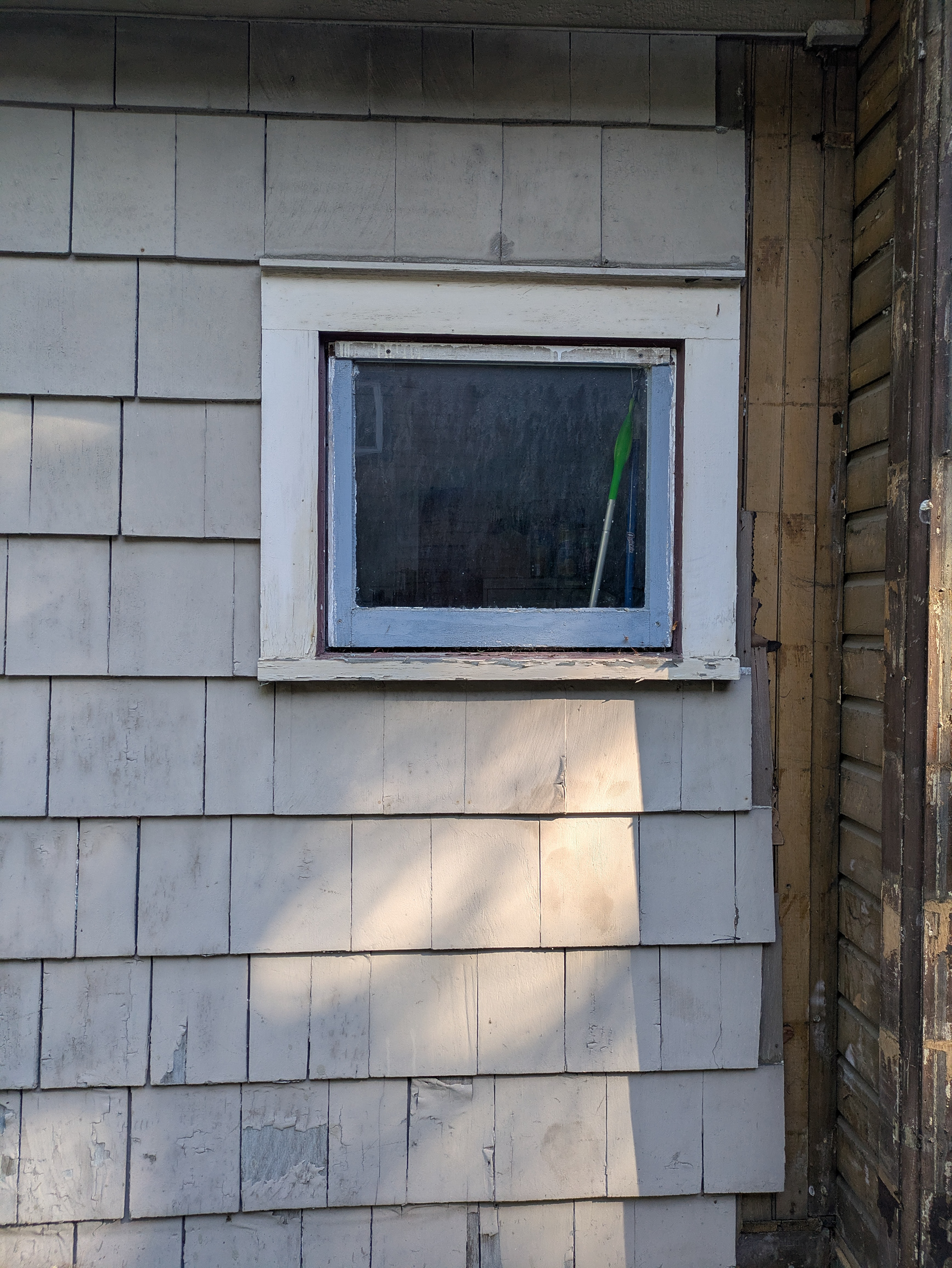
Most of the time, when we encounter rotten exterior trim, we replace it. However, replacing exterior trim can be costly and doesn’t always make financial sense. This can especially be the case when we are doing exterior restoration work on an outbuilding such as a garage. In such cases it is worth considering wrapping the existing trim in coil stock.
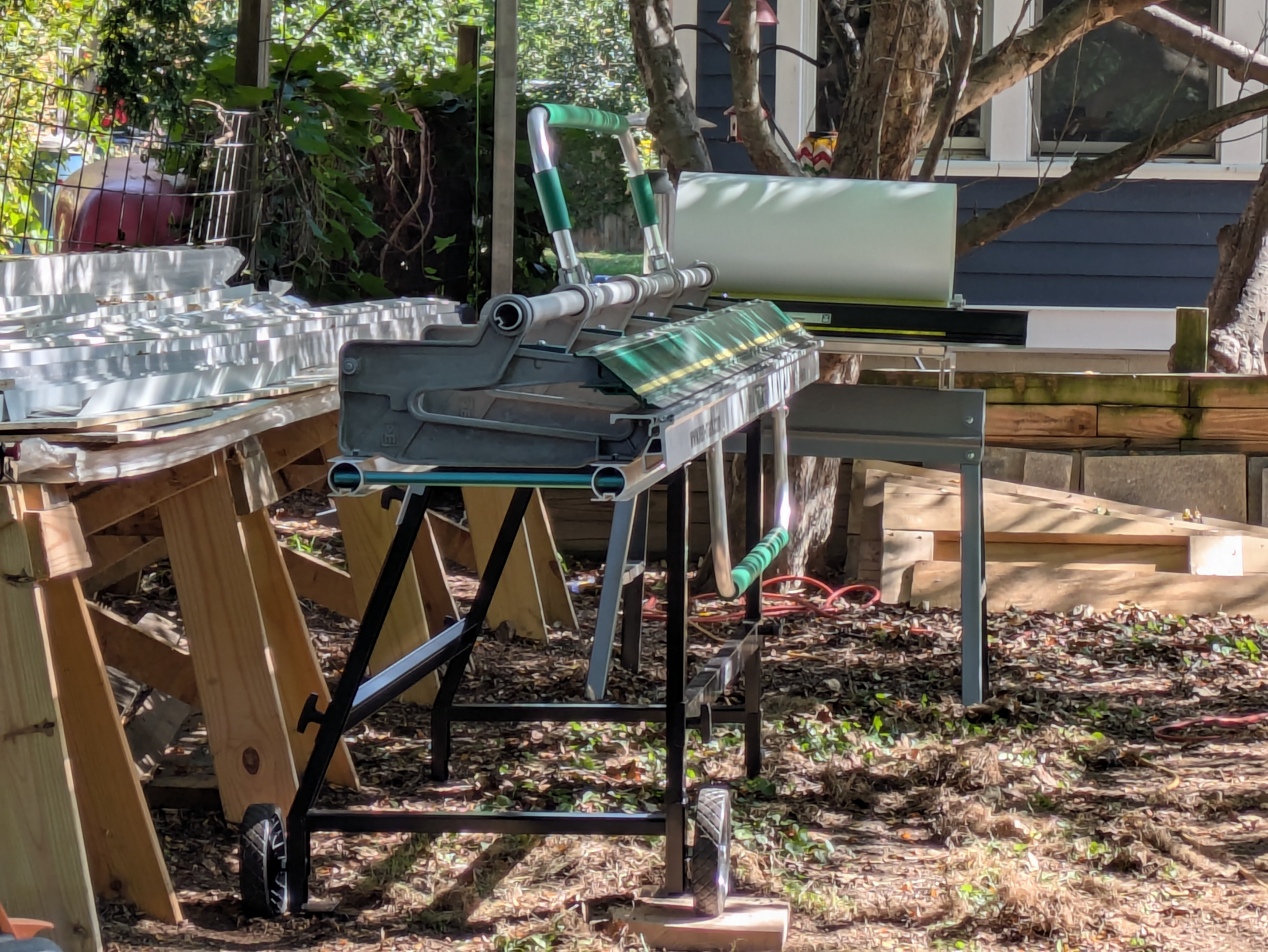
Coil stock is a roll of aluminum trim that comes in a variety of colors. We use a tool called a siding break (pictured here) to bend the aluminum to the necessary shape of the trim we are wrapping.
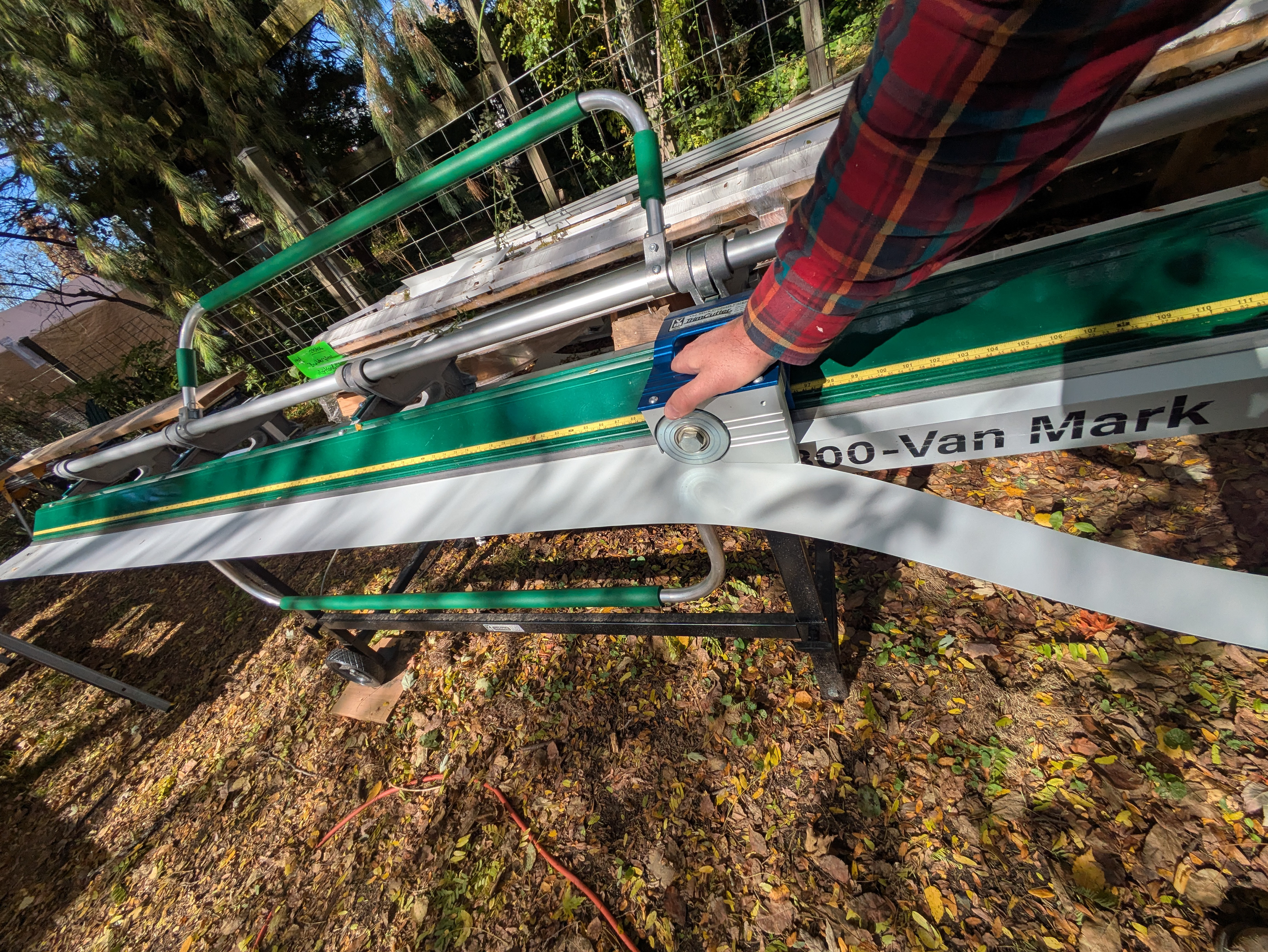
We start by cutting the coil stock to width with a special cutter on the siding break.
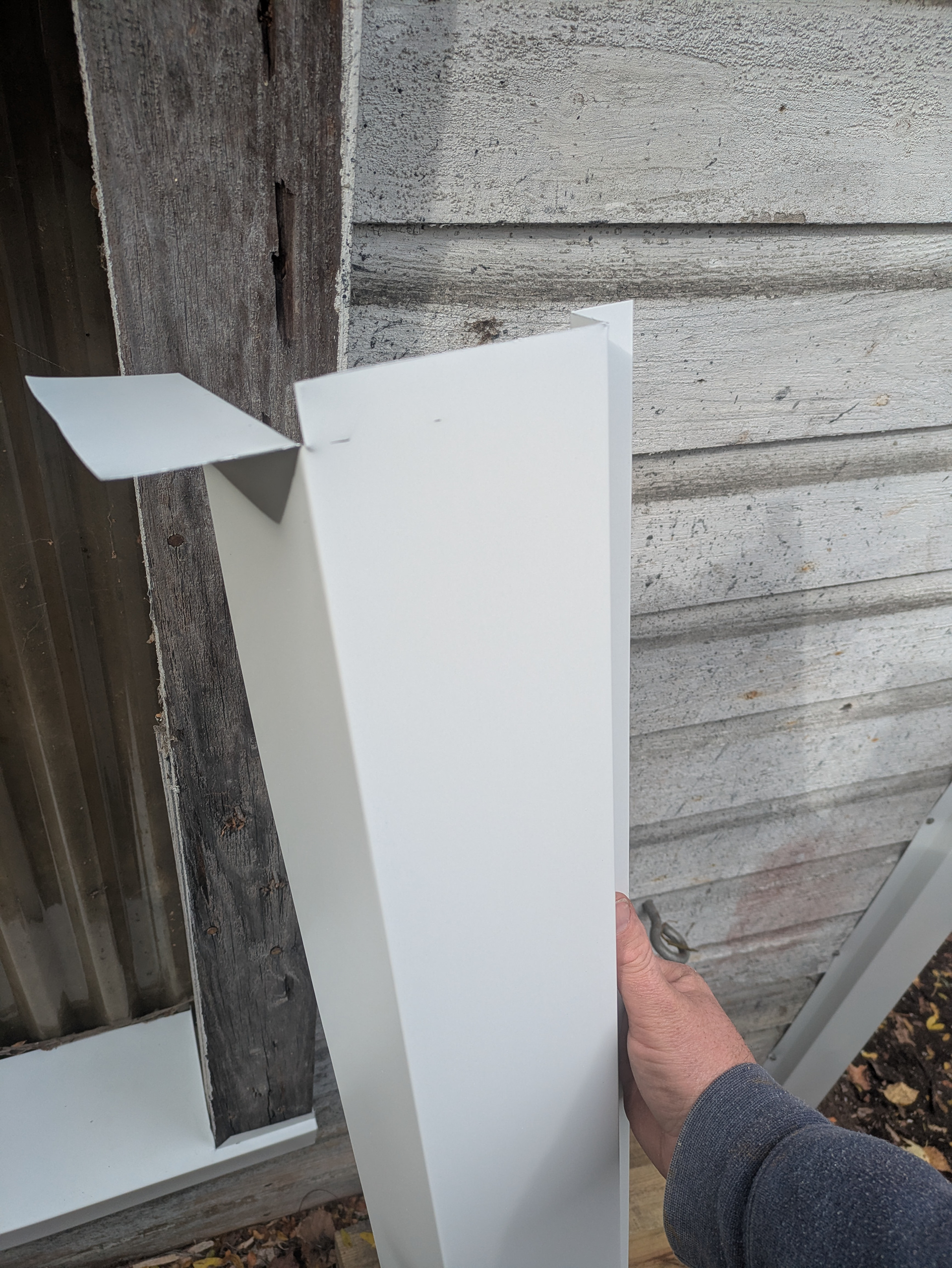
For wrapping window trim, we start with the sill, then we bend the casing legs. Each piece of trim wrap is bent so it will tuck under the coil stock trim wrap above. This ensures that water doesn’t work its way behind the coil stock.
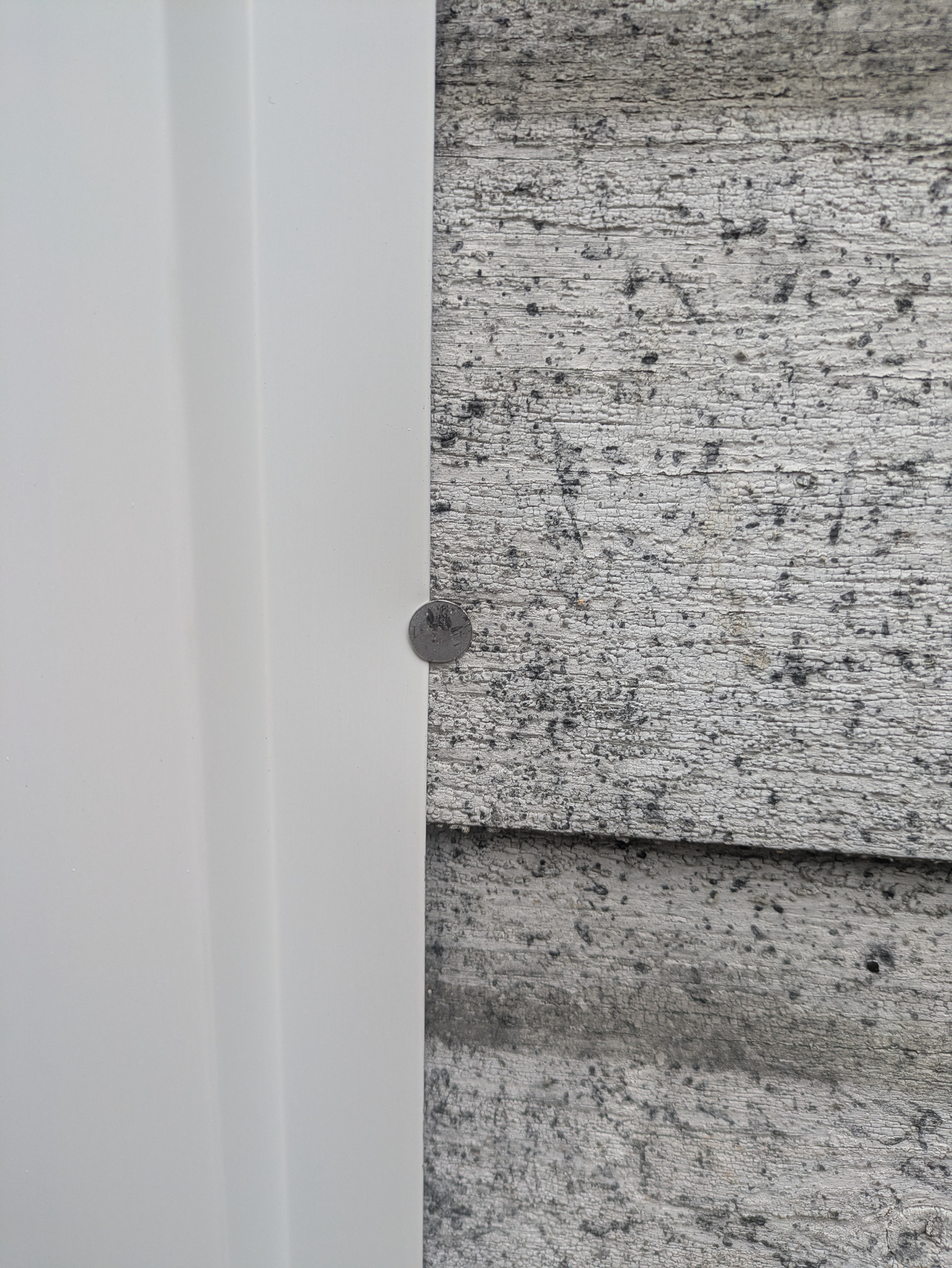
If we are going to be installing new siding, we will bend a nailing flange into the casing wraps. We lightly pinch the trim down with aluminum roofing nails. This will reduce the likely hood of “oil canning”, ripples in the trim caused by expansion and contraction from exposure to sunlight.
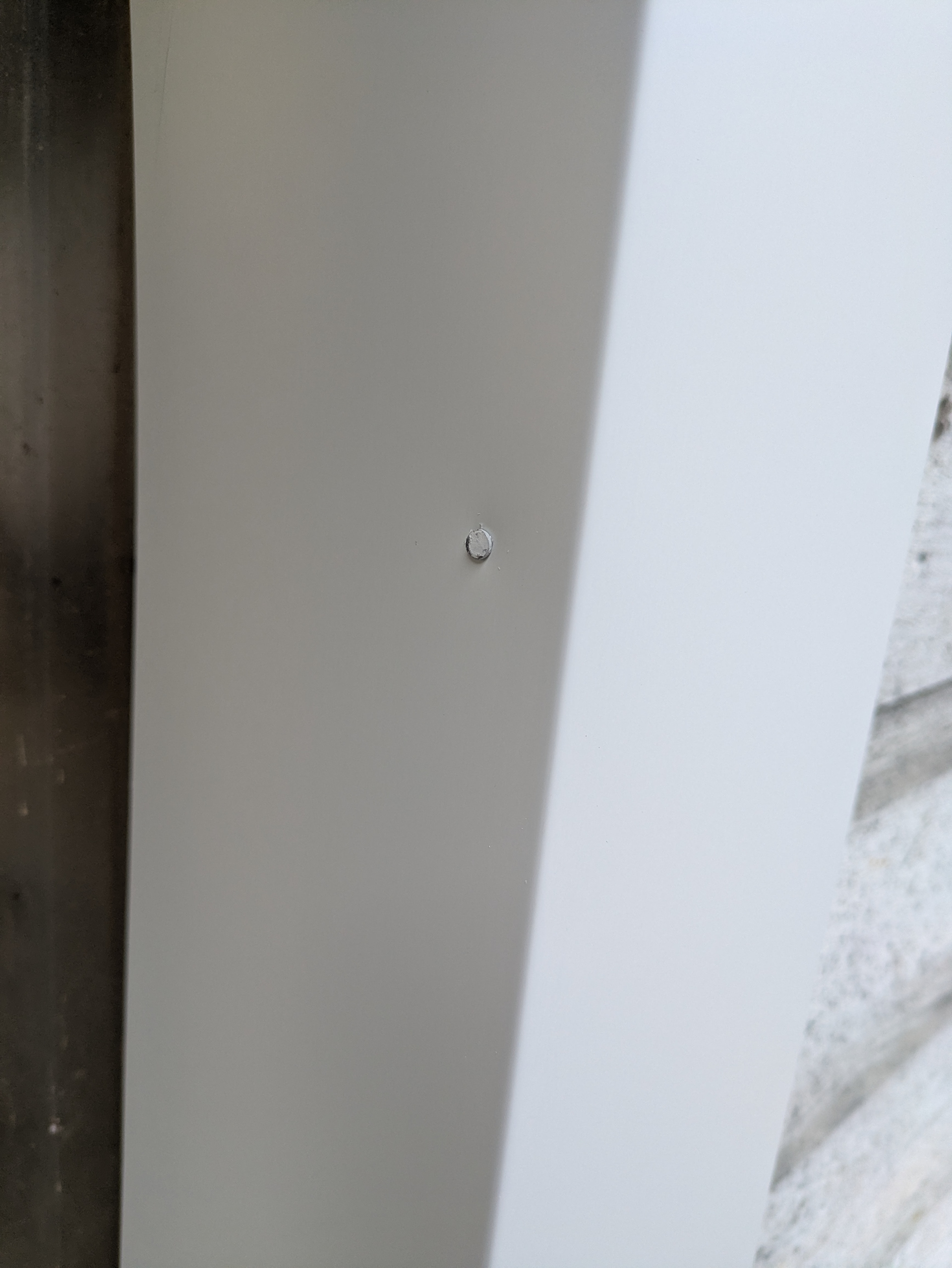
The trim wrap is minimally nailed to the trim with color matched aluminum nails.
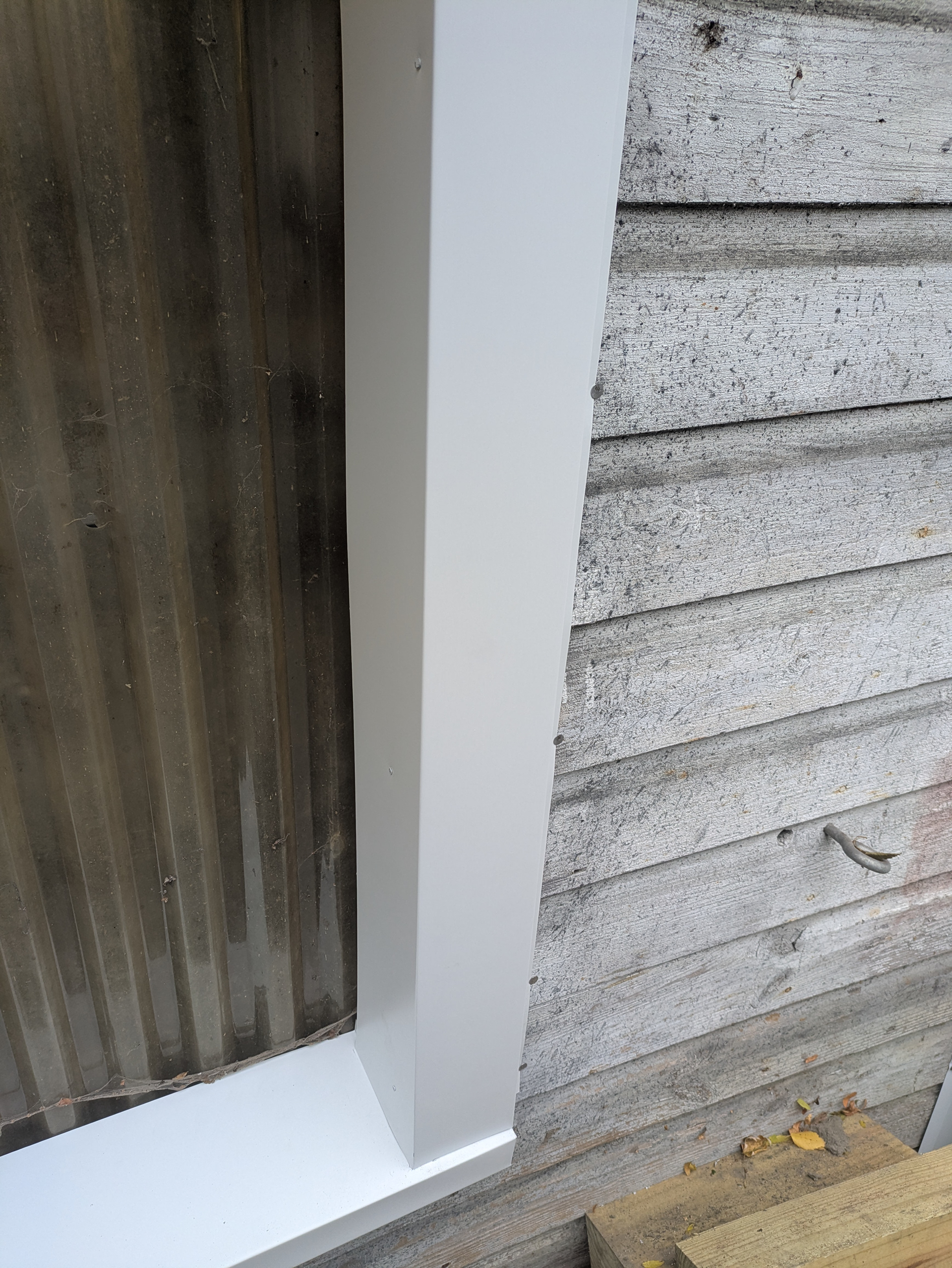
The casing leg looks like this when its wrapped.
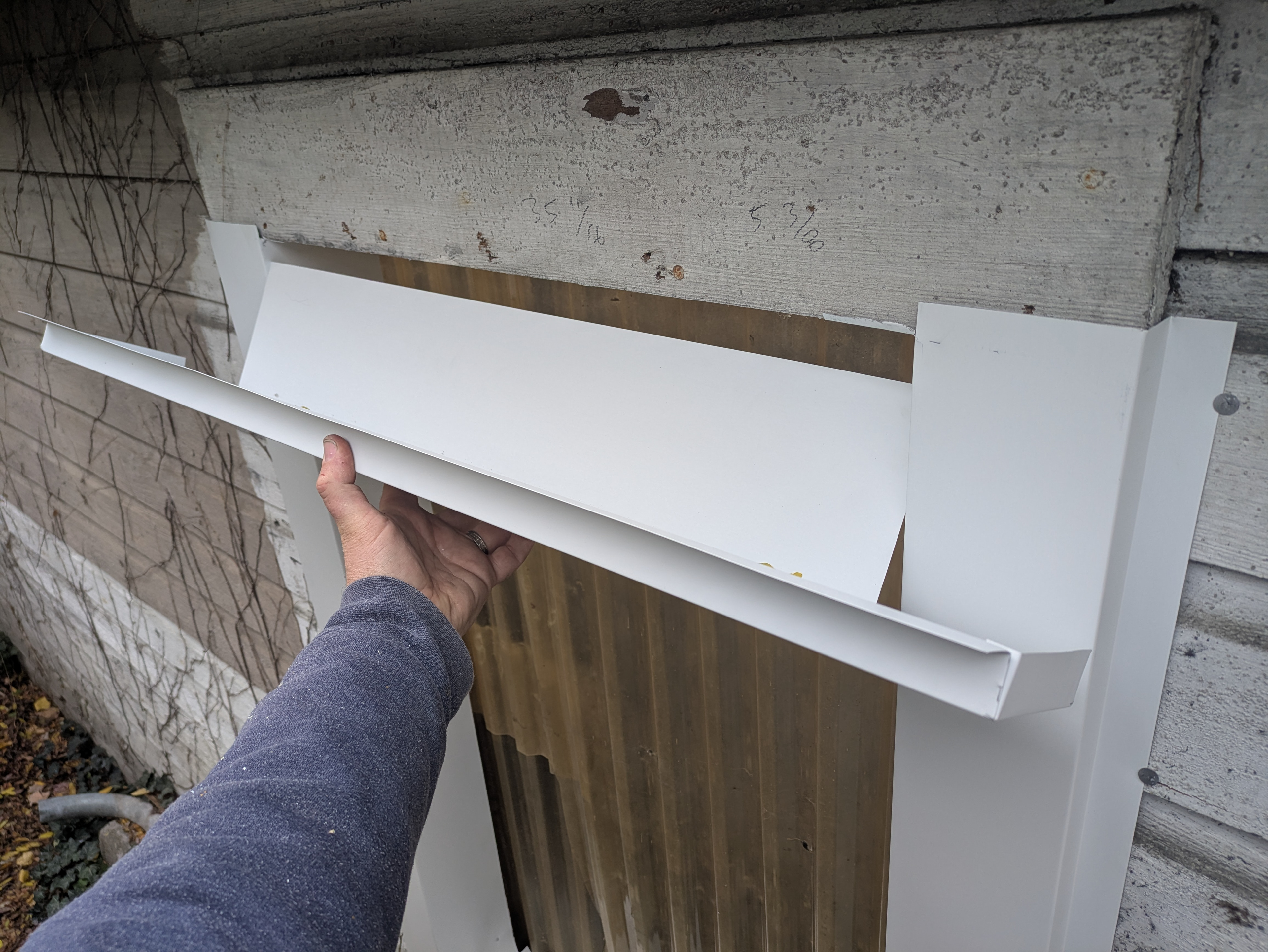
The head casing is a slightly more complicated piece to bend. It must overlap the legs as well as the entirety of the head casing.
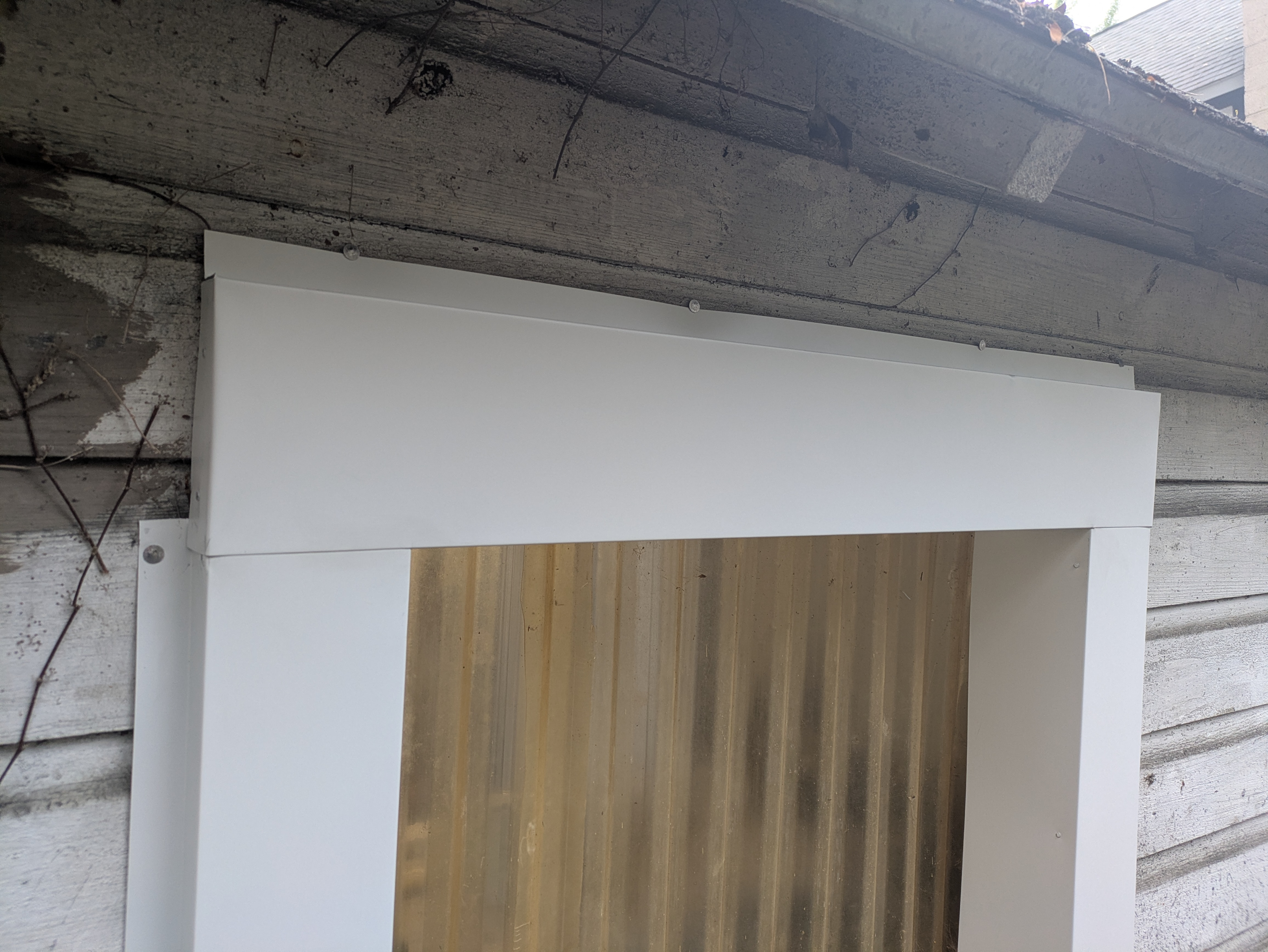
Here is an example of a head casing wrap.
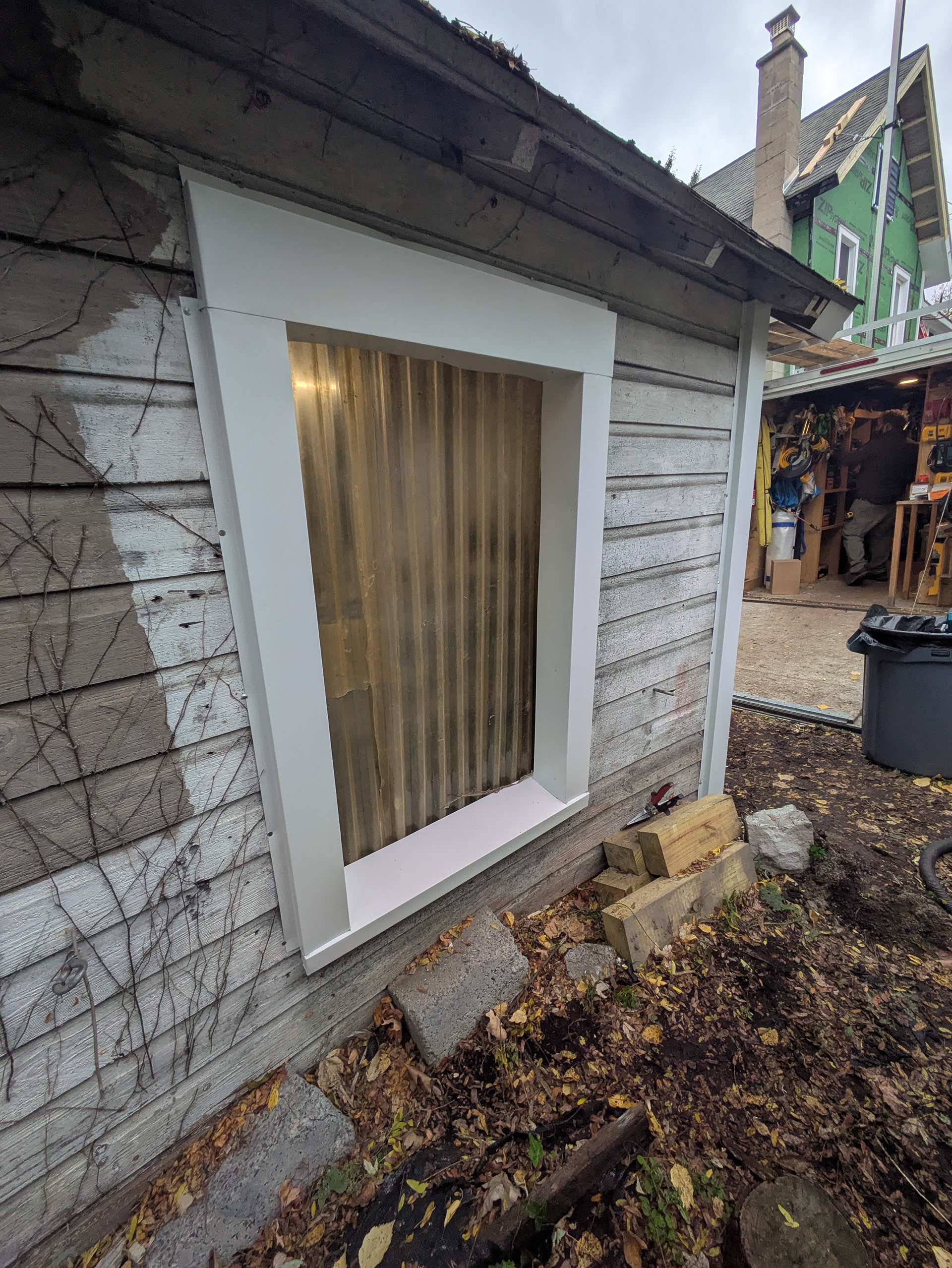
This window is ready for siding.
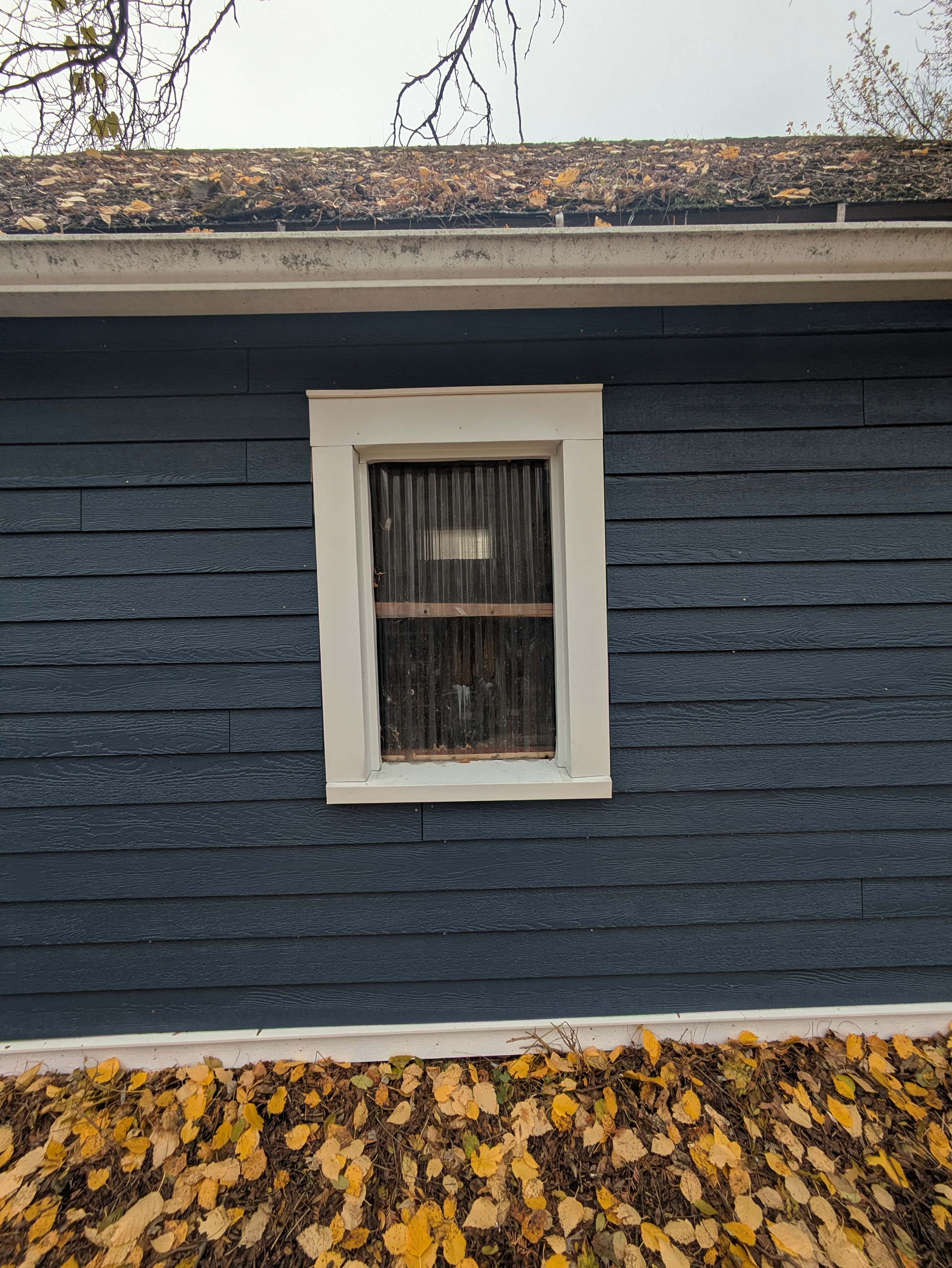
The siding covers the nailing flange.
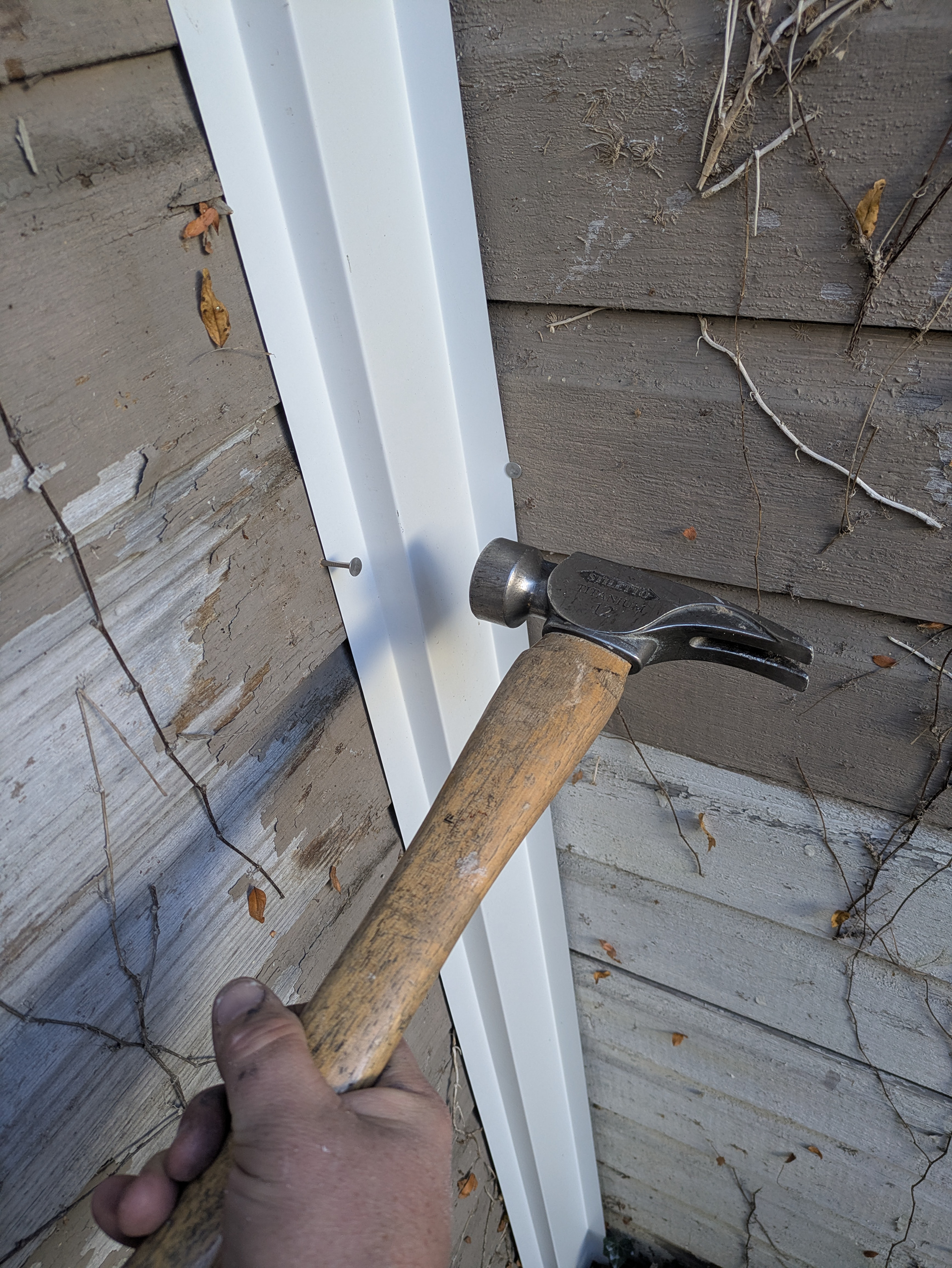
An inside corner board is wrapped in a similar fashion.
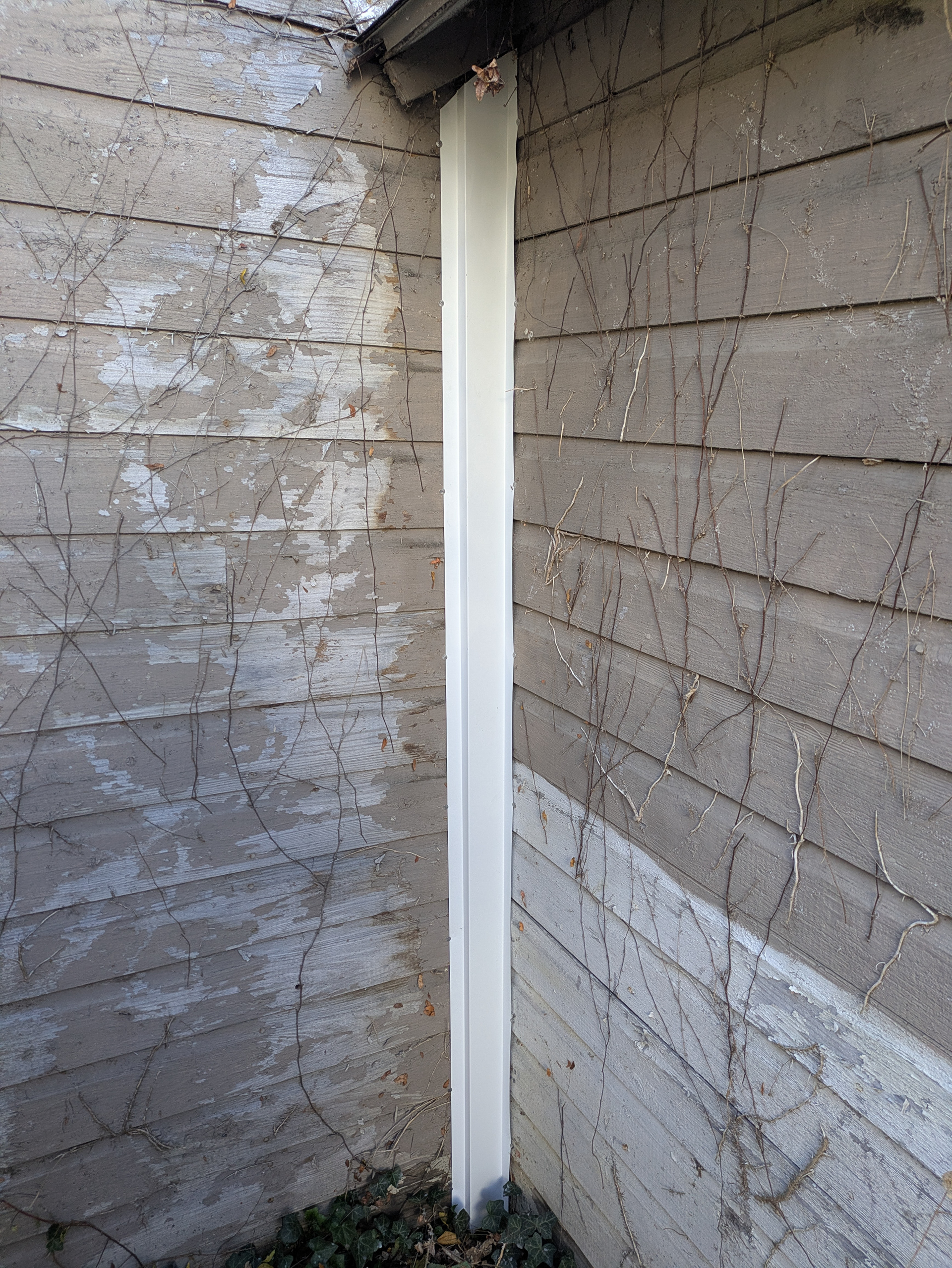
The nail flanges on this inside corner board will be covered with siding.
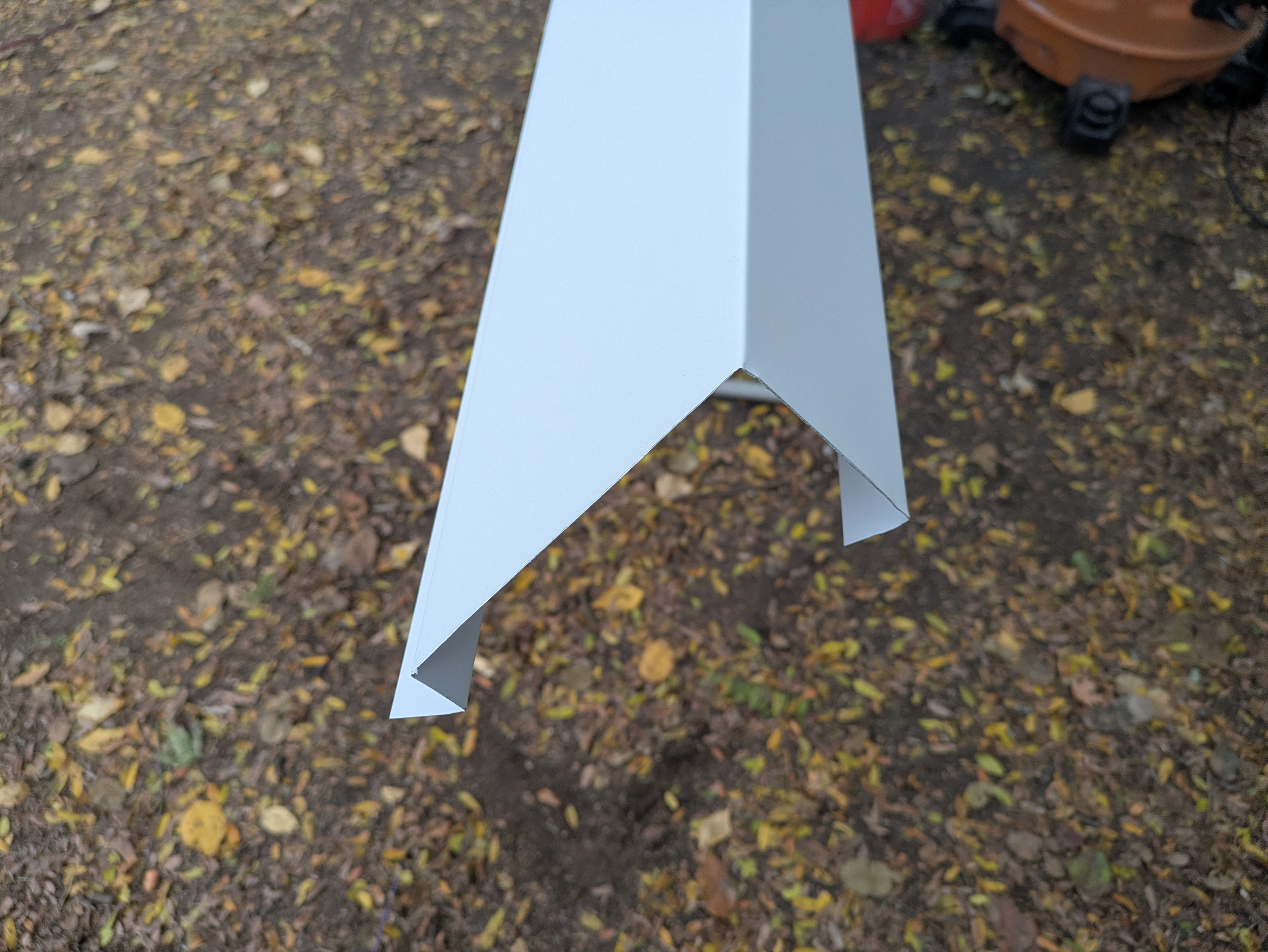
This is an outside corner board. There is no nail flange on the left side of the trim wrap because that part of the shed will not be getting new siding.
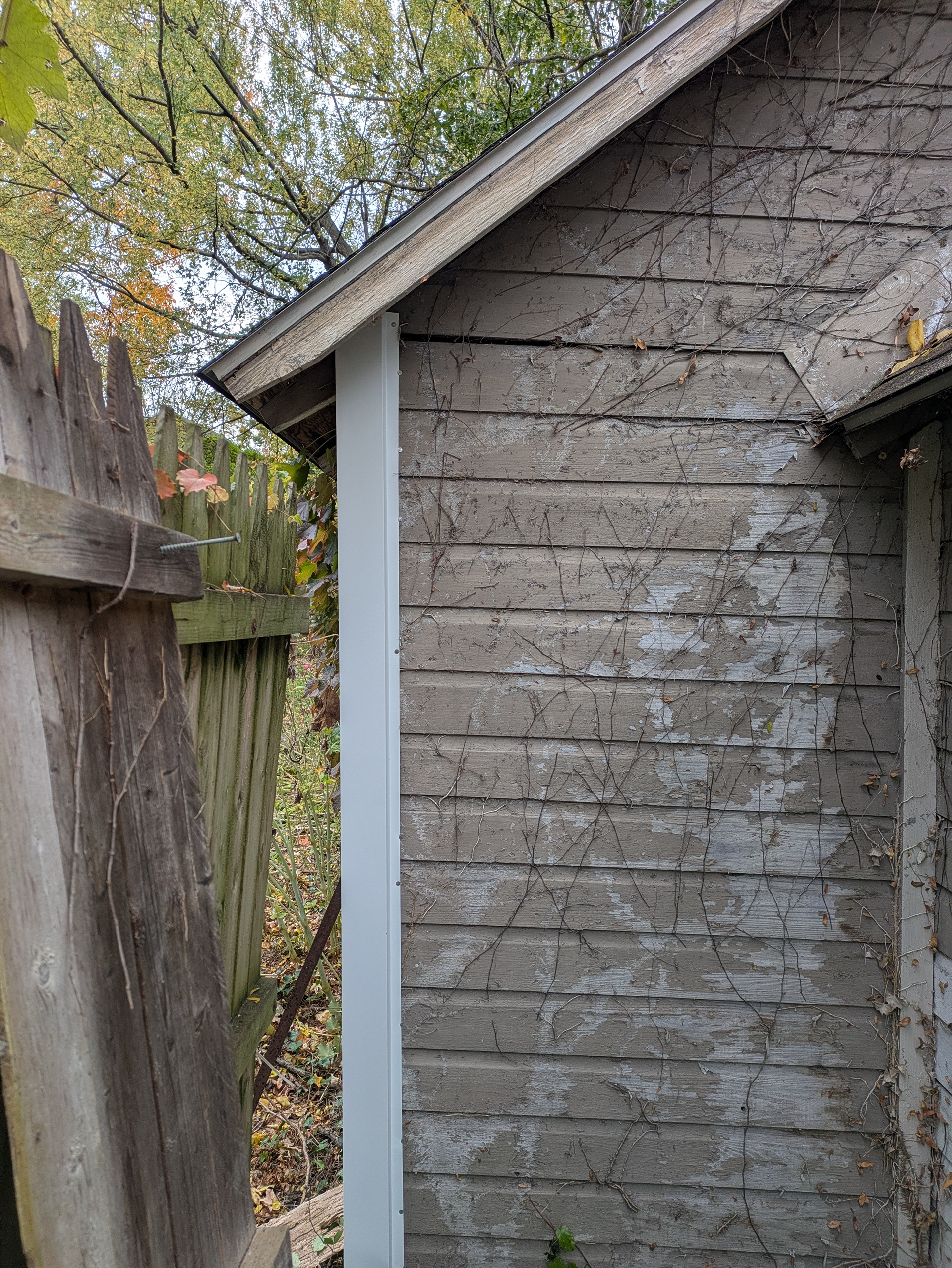
This outside corner board is ready for siding.
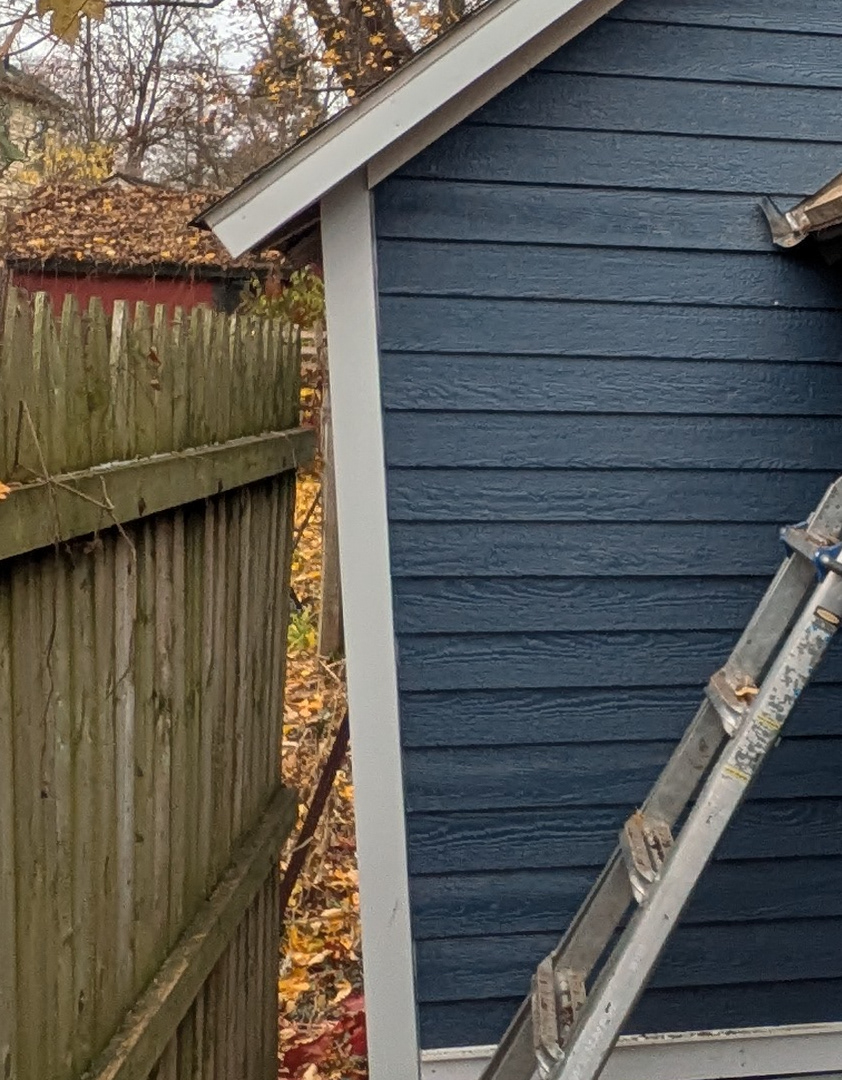
The siding covers the nail flanges.
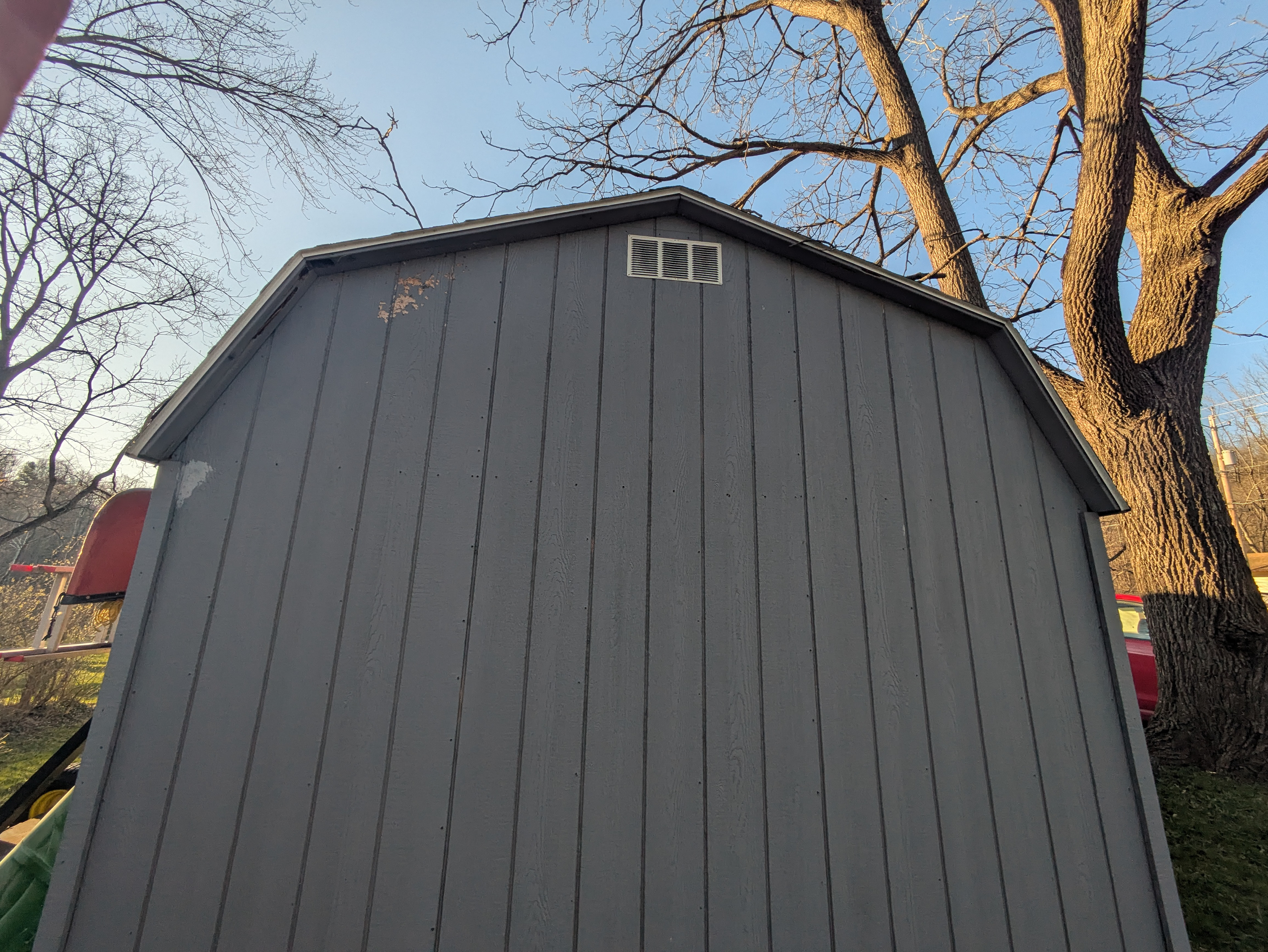
The soffit and fascia (the underside of the roof overhang) on this shed have seen better days.
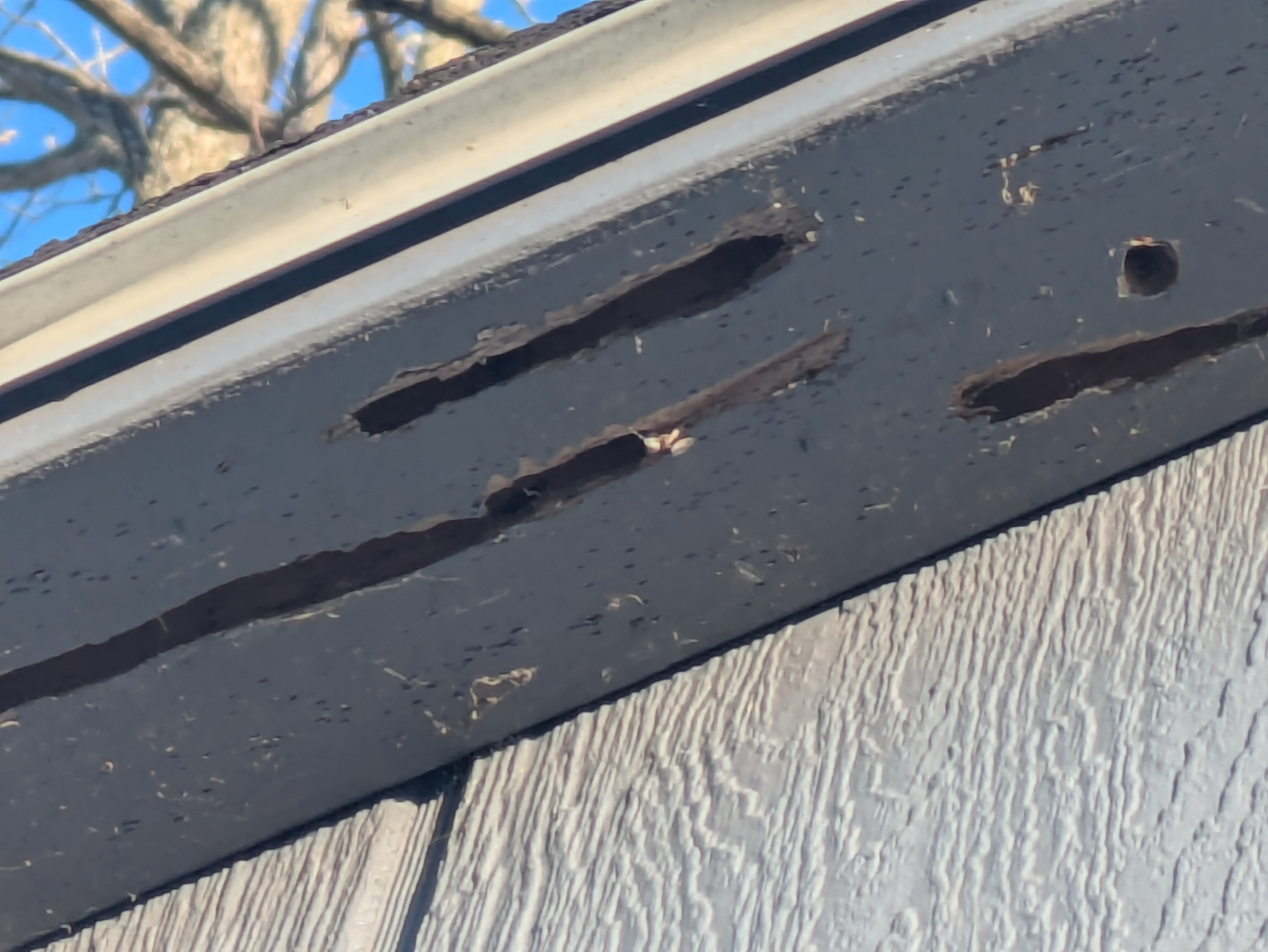
Insects and woodpeckers have bored holes into the wood.
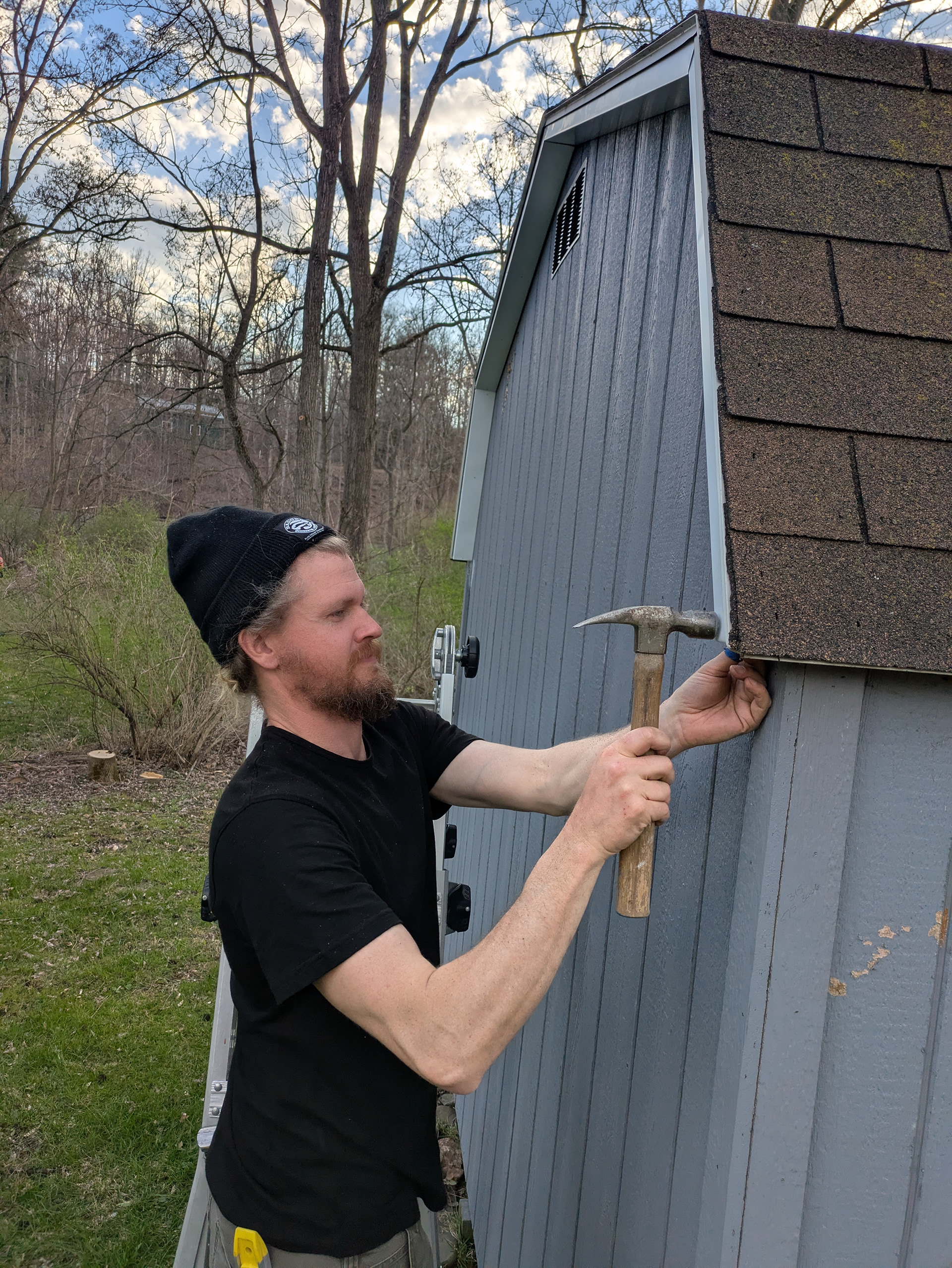
The coil stock is bent to tuck up under the drip cap on one side and between the soffit and siding on the other side. The coil stock is secured with white painted aluminum nails.
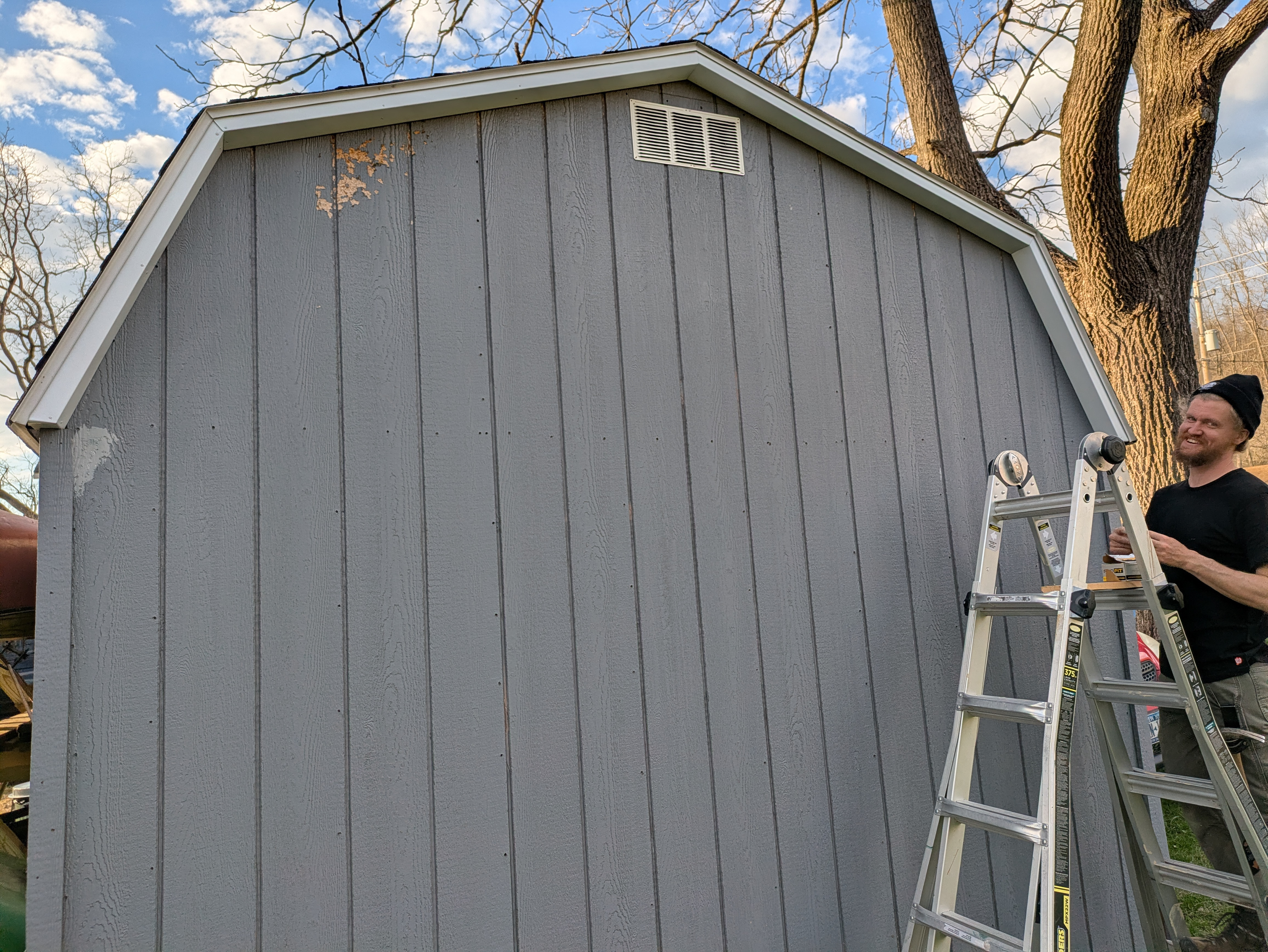
The soffit and fascia of this shed look a lot better now that they’ve been wrapped.
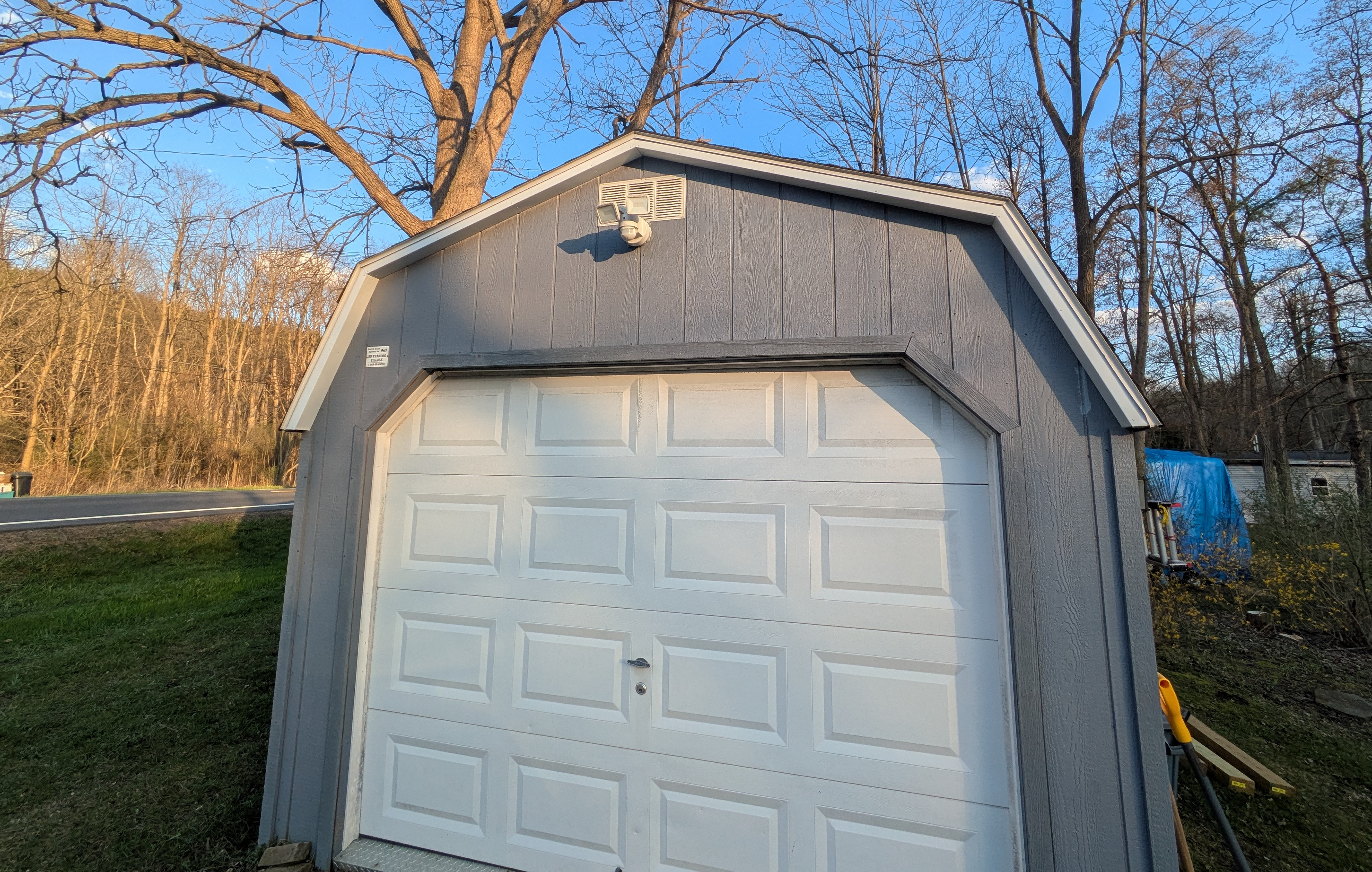
Wrapping trim with coil stock is not always an appropriate solution to weathered or damaged exterior trim. However, when the existing trim is in good enough shape, wrapping trim can be a cost effective way to improve the looks of a building while preserving what’s left of the existing trim’s integrity.